Sudden electric shock pain in the face is the hallmark of trigeminal neuralgia. This page explains how it is diagnosed, when medicines are enough, and when a trigeminal neuralgia specialist in Hyderabad may recommend surgery that treats the cause.
Trigeminal neuralgia treatment: the quick answer
Trigeminal neuralgia is usually treated first with medicines such as carbamazepine. When medicines stop working or cause side effects, microvascular decompression (MVD) surgery can treat the cause by moving a blood vessel away from the nerve. MVD also treats hemifacial spasm.
What is trigeminal neuralgia?
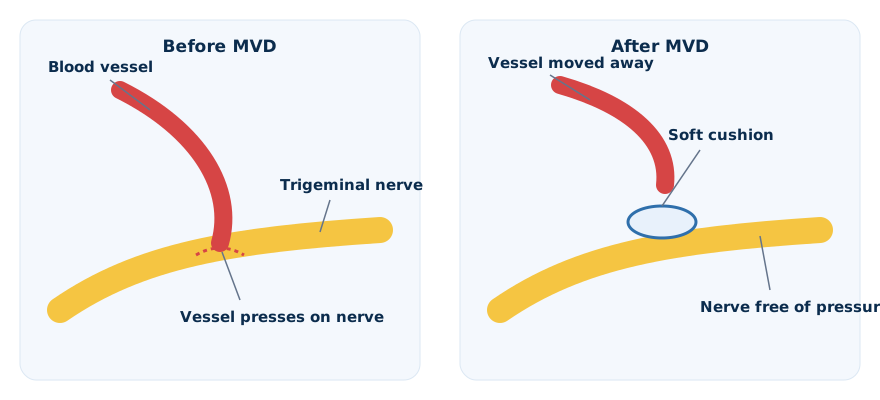
Trigeminal neuralgia causes sudden, severe, electric-shock-like pain on one side of the face. Attacks are often triggered by touching the face, chewing, talking, brushing teeth or even a breeze. In most cases the pain is caused by a blood vessel pressing on the trigeminal nerve, the nerve that carries sensation from the face.
Hemifacial spasm: face twitching on one side
Hemifacial spasm causes involuntary twitching on one side of the face, often starting around the eye and sometimes spreading to the cheek and mouth. It is usually caused by a blood vessel pressing on the facial nerve, the nerve that controls the muscles of the face. Hemifacial spasm treatment follows a similar pathway to trigeminal neuralgia: injections first, and surgery on the cause when needed.
How it is diagnosed
Diagnosis starts with a clinical examination of the face and its triggers. A special MRI of the brain is then done to show whether a blood vessel is touching the trigeminal or facial nerve, and to rule out other causes of facial pain or twitching.
Treatment without surgery
For trigeminal neuralgia, medicines such as carbamazepine or oxcarbazepine are the first treatment, and many patients are well controlled on them. For hemifacial spasm, botulinum toxin (Botox) injections relax the twitching muscles for a few months at a time. Surgery is considered when these treatments stop working or cause side effects.
Microvascular decompression (MVD) surgery
Microvascular decompression (MVD) is trigeminal neuralgia surgery that treats the cause rather than the symptom. Through a small opening behind the ear, the neurosurgeon gently moves the blood vessel away from the nerve and places a small soft cushion between them. Because the nerve itself is not injured, MVD usually preserves normal sensation in the face. The same operation, performed on the facial nerve, treats hemifacial spasm.
Other options for trigeminal neuralgia
Needle procedures (radiofrequency, glycerol or balloon treatment of the nerve) and radiosurgery are alternatives that may suit patients who are not fit for surgery. These work by numbing the nerve rather than relieving pressure on it, so some facial numbness is expected and pain can return.
Risks, in plain language
Like all brain surgery, MVD has risks. These include hearing loss on the operated side, facial numbness or weakness, spinal fluid leak, infection, and rare serious complications. Your neurosurgeon will explain what these mean for your individual case before any decision is made.
Recovery after MVD
Most patients spend a few days in hospital after MVD and are up and walking soon after surgery. Everyday activities are resumed gradually over the following weeks, and a follow-up visit checks the wound and your progress. Your surgical team gives you a personalised timeline before discharge.
Trigeminal neuralgia specialist: what to ask before surgery
Patients often ask whether to see a neurologist or neurosurgeon for trigeminal neuralgia: a neurologist usually begins and adjusts medicines, while a neurosurgeon is the right specialist once surgery is being considered. Before choosing a trigeminal neuralgia doctor for surgery, ask about the surgeon's experience with MVD and skull base surgery, whether your MRI clearly shows a vessel touching the nerve, and what the alternatives are if you are not suited to surgery. Dr. Arun Reddy M, MBBS, DNB Neurosurgery, FCVS (Japan), is trained in cerebrovascular and skull base surgery and is a Neurosurgeon at CARE Hospitals, HITEC City.